Public Sector · Organisation Design · Capability
Formalising service design practice beyond a transformation programme

Overview
As a large government transformation scaled, service design needed to be formalised into a consistent, sustainable capability beyond the programme.
My role
Service Designer — I led the design and delivery of an organisation-wide service design toolkit, shaping its structure, content, and governance. I led engagement and co-design across the ministry and worked closely with service design capability leads to ensure the toolkit was usable, adopted, and maintainable long term.
What needed deciding
The challenge
While an overall service design approach already existed, it was interpreted inconsistently across teams. Designers and delivery teams were unclear about how much detail was appropriate at different stages, when specific tools should be used, how artefacts related over time, and what “good enough” looked like in practice.
Without shared guidance, service design risked becoming either overly detailed too early or superficial and inconsistent across teams. There was also a growing risk that knowledge of how the programme practised service design would be lost as people rotated off the programme.
Although a service design toolkit sat on the strategic roadmap, practice had not been formally documented or stabilised. Without intervention, it would have continued to fragment, making outputs harder to interpret, reuse, and govern as delivery scaled.
The focus
To make service design practice clear, practical, and governable — without redefining or replacing the underlying approach.
Priority was given to:
clarifying when and how core service design tools should be used
defining appropriate levels of detail at different stages of delivery
grounding guidance in real programme practice rather than abstract models
ensuring knowledge could be sustained beyond individual contributors
How direction was shaped
Approach
I treated this as a translation and stabilisation problem, not a design-theory exercise.
The work focused on capturing how service design was already being used successfully and turning that into shared guidance teams could apply without deep context or individual coaching. Rather than introducing new frameworks, expectations around timing, structure, and level of detail were made explicit for existing tools.
The toolkit was positioned as a capability asset, designed to support onboarding, delivery, and governance over time.
Key activities
Established a shared understanding of where service design practice was breaking down and what teams needed to apply it consistently
Consolidated existing tools into a single toolkit with clear guidance on purpose, timing, and level of detail
Embedded the toolkit through demos, walkthroughs, and ongoing engagement with design and delivery teams
Put ownership and governance in place with service design capability leads to support long-term use
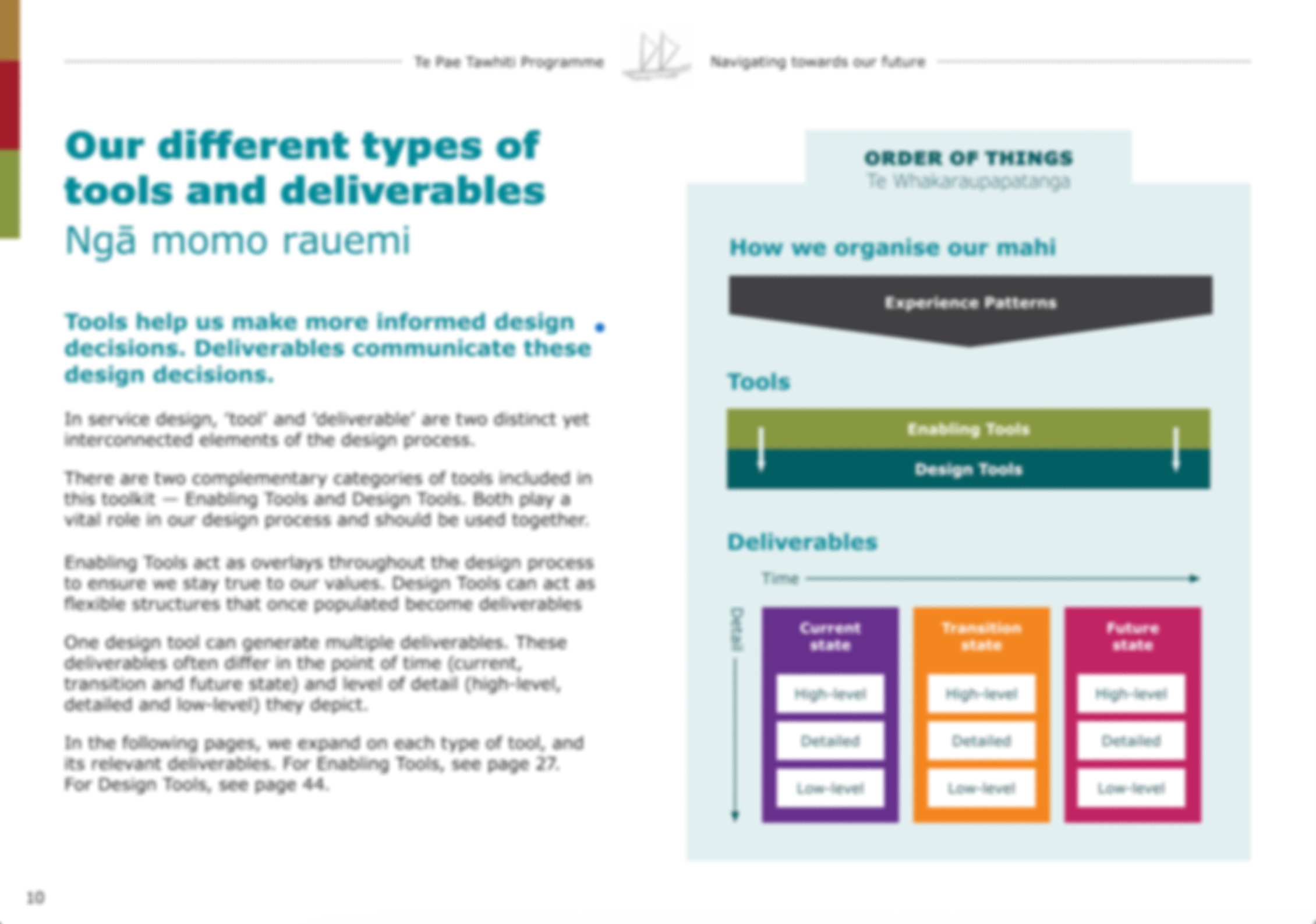
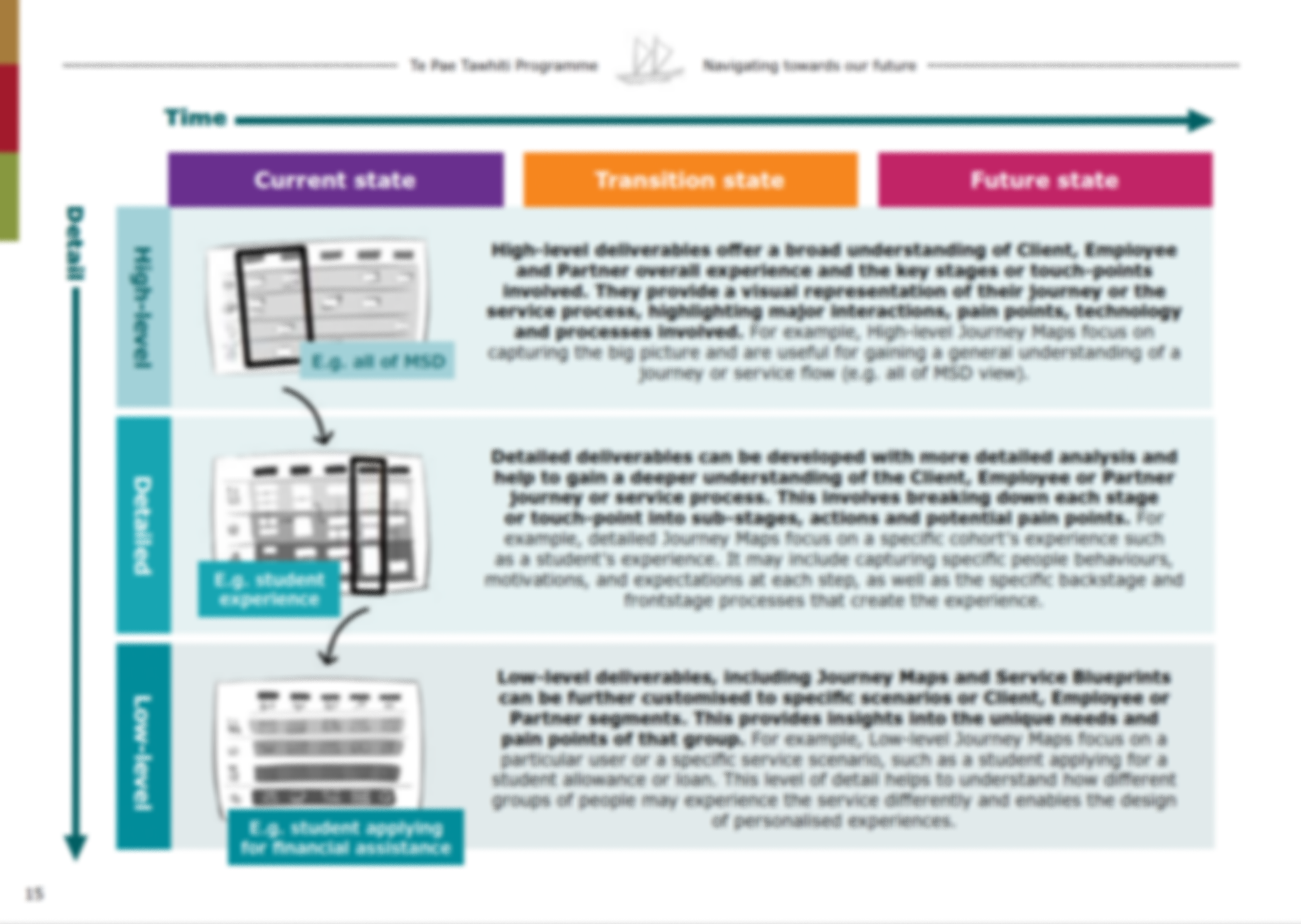
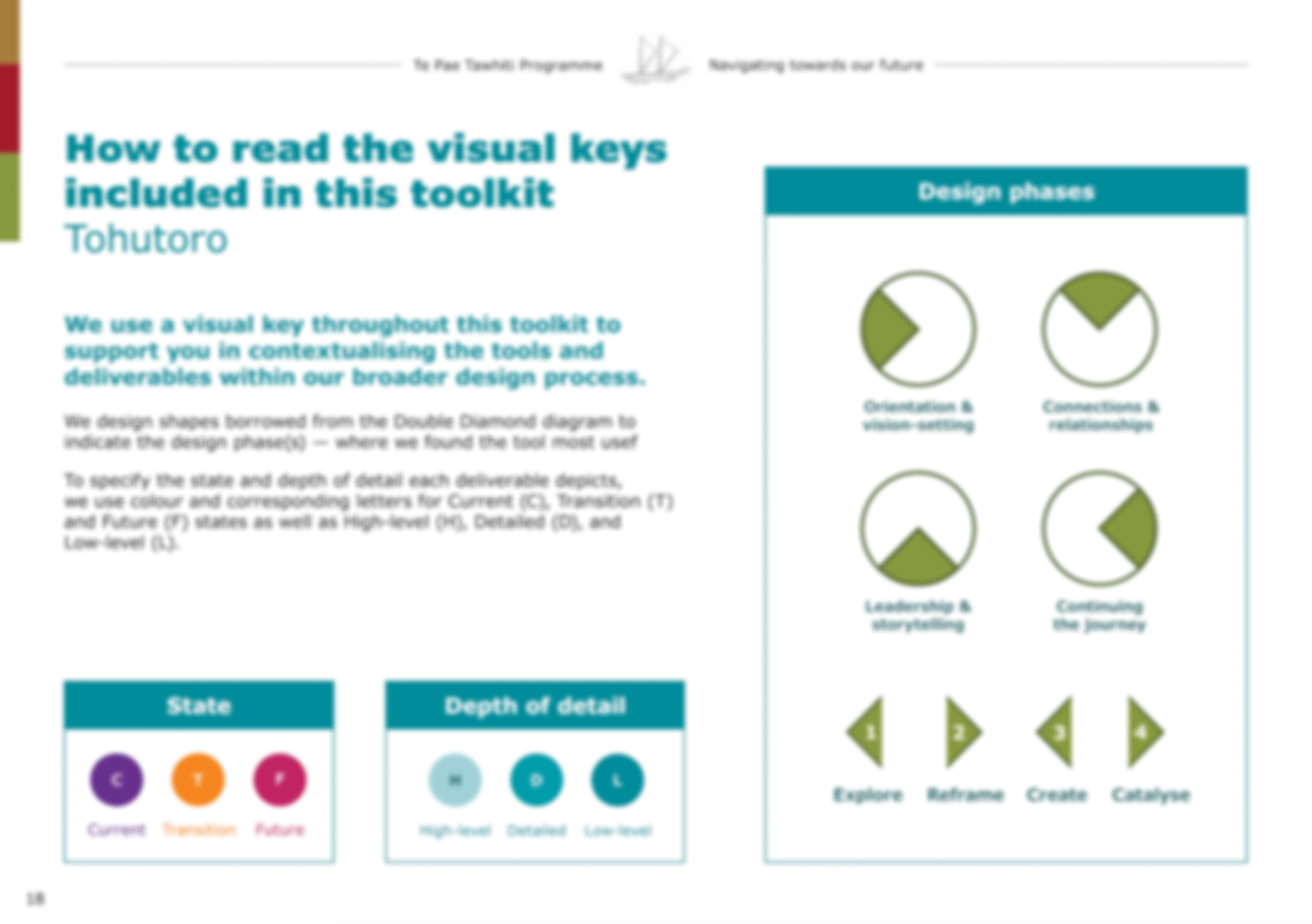
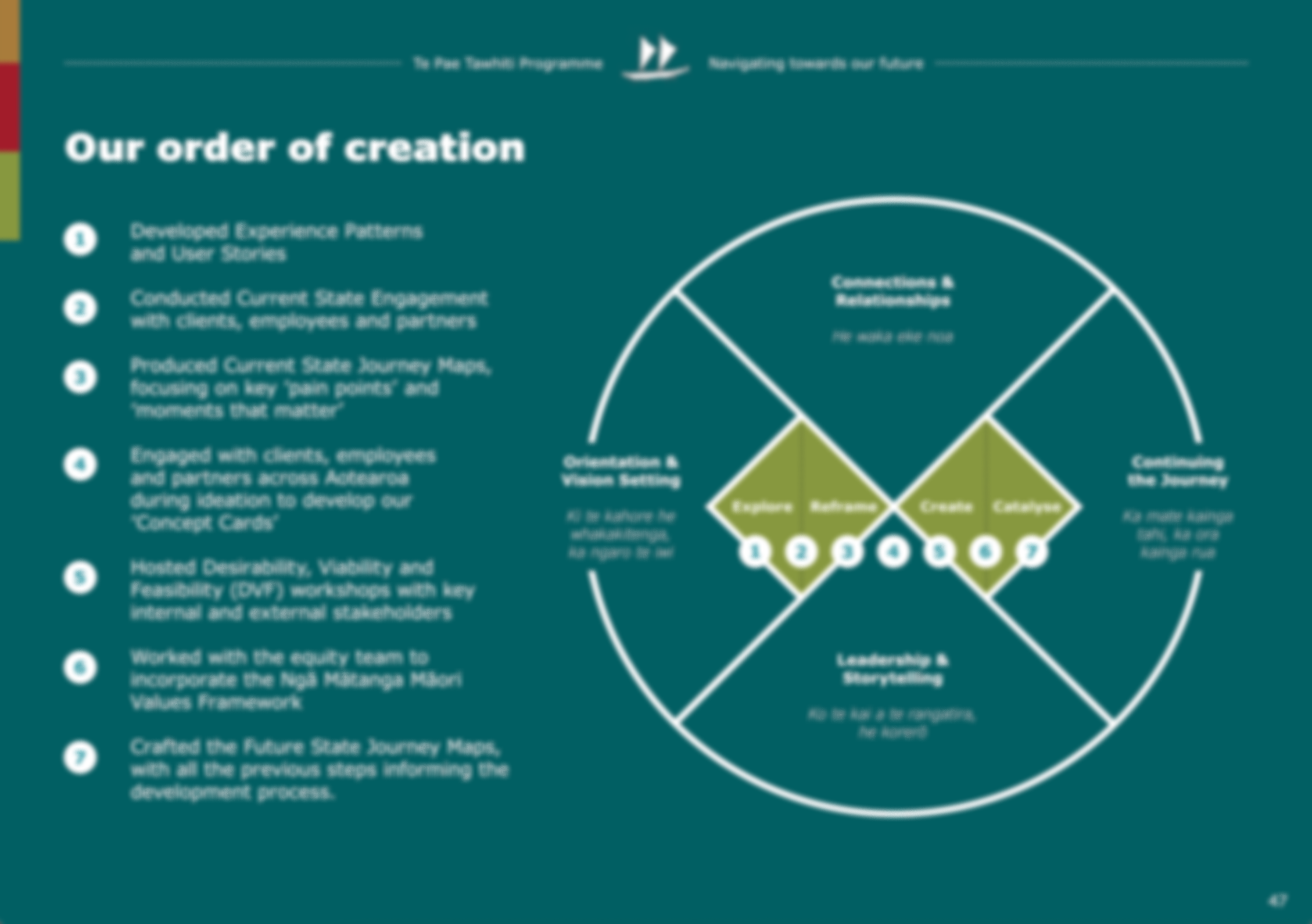
Extracts from the service design toolkit showing tool purpose, level of detail, and timing (blurred)
Key service decisions
To formalise existing practice rather than introduce a new design model
To anchor guidance in real programme examples instead of idealised maturity frameworks
To explicitly define expectations for timing, structure, and level of detail for core service design tools
Why these decisions mattered
Without shared expectations, service design outputs were difficult to interpret or reuse. Making practice explicit reduced ambiguity, supported more consistent application across teams, and shifted service design from individual expertise to organisational capability.
Formalising practice also ensured knowledge would endure as teams changed, rather than being lost with programme turnover.
Outcomes and implications
Deliverables
A governance-approved service design toolkit establishing an endorsed baseline for how tools are structured, timed, and applied
Example-led guidance showing appropriate levels of detail at different stages of delivery
Onboarding and enablement materials to help new teams and partners adopt the agreed approach
Outcomes and impact
Teams developed a clearer, shared understanding of how service design should be applied at different stages of delivery
Designers spent less time negotiating expectations and more time supporting real delivery needs
Service design became easier to onboard and sustain beyond the transformation programme
The toolkit was selected for an incoming Ministerial briefing as an example of how the programme operated in a design-led way
Key learning
In large transformations, service design capability breaks down not because teams lack intent, but because expectations around timing, level of detail, and tool use are left implicit. Making practice explicit and owned was critical to sustaining design beyond the programme.