Public Sector · National Welfare · Service Direction
Blueprinting a welfare transformation that pensioners depend on
Overview
A multi-billion dollar, 9-year government digital transformation sought to redesign welfare service delivery from scratch for 5 million New Zealanders.
When the programme pivoted to prioritise pensioners as the first population served, 16+ delivery teams, multiple vendors, and external agencies needed to align fast.
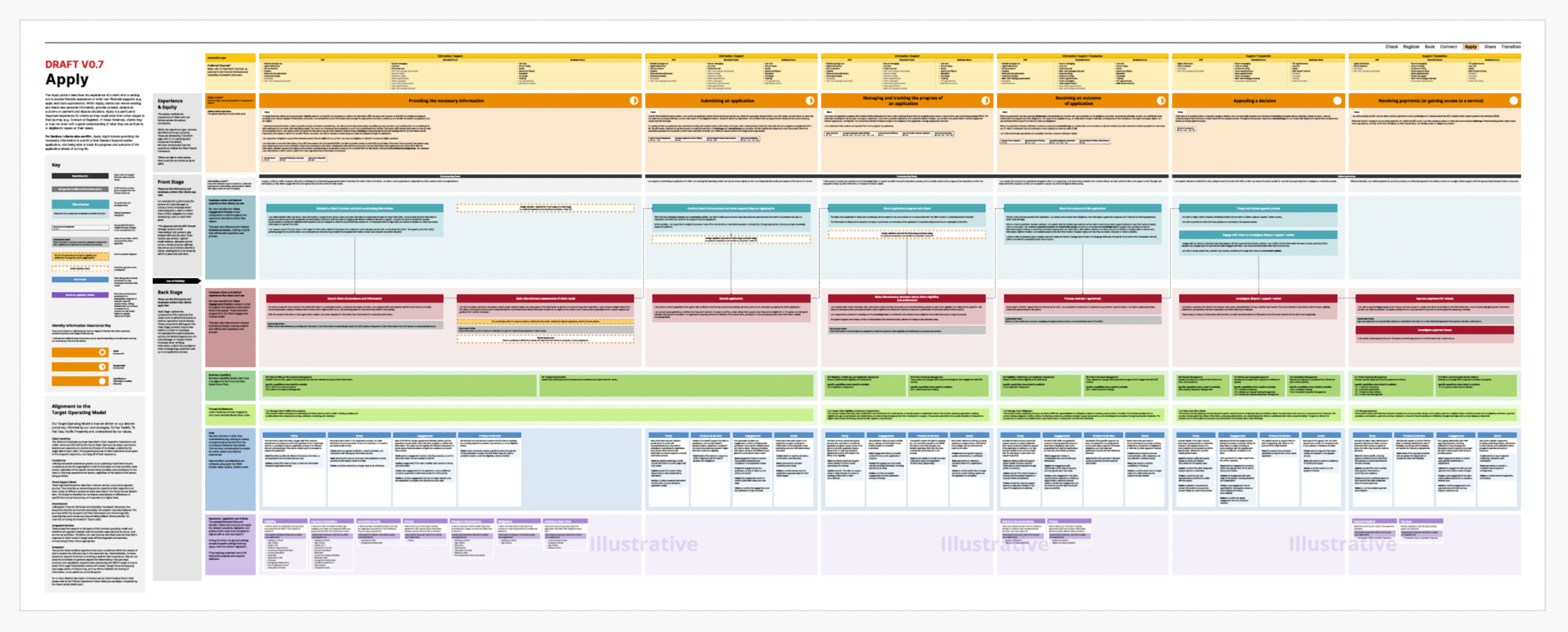
One of seven future and transitional-state service blueprints developed for the pensioner programme, showing colour-coded swimlanes across front stage, back stage, and support functions — used to make dependencies, handoffs, and sequencing decisions explicit across delivery teams.
My role
Lead Service Designer — I led a core team of three and the service design workstream end-to-end, facilitating cross-functional workshops, synthesising insights into actionable artefacts, and working closely with policy, legal, enterprise architecture, benefits modelling, business analysis, and delivery teams. I mentored junior designers, built capability across the programme, and advocated for design-led decision-making in a politically and technically complex environment.
This case study focuses on one of four projects I led within the programme. My earlier work included the strategic design phase, where I led a partner experience workstream mapping the needs of approximately 2,000 external partners across community organisations, service providers, NGOs, and industry.
What needed deciding
The challenge
The ministry administered pension and income support services to 850,000+ New Zealanders aged 65 and over — a population growing by approximately 80 people per day, projected to reach 1 million by 2028.
Decades of accumulated complexity had created a fragmented system of 500+ tools, unofficial workarounds, and institutional memory that left when staff did. It was reported that nearly one in four beneficiaries were receiving the wrong level of support.
The programme was a greenfield build — a new digital foundation designed from scratch while the old system continued serving vulnerable people daily. The immediate challenge was to reorient a programme built around working-age services to deliver for pensioners first, providing just enough service clarity to guide build decisions without over-specifying a solution that would constrain future populations.
How might we front-load service clarity in a greenfield environment where early sequencing decisions carry disproportionate risk for national delivery, operational load, and citizen trust?
Who this affected
New Zealand's pensioners are not a homogeneous group. Many relied on phone or in-person support rather than digital channels. Some were overseas, requiring cross-agency evidence coordination. Others had disabilities or accessibility needs. Many received supplementary payments including accommodation support, disability allowances, or residential care funding, adding further complexity to their service journeys.
For 9,000+ frontline employees navigating a shifting programme, unclear sequencing created real risk. Without a shared service view, teams would build on assumptions rather than evidence, creating problems costly and disruptive to fix at national scale.
How direction was shaped
The grounding insight
Early service scoping revealed that pensioner needs diverged significantly from working-age services in ways not visible at programme level. Escalation paths, evidence handling for overseas pensioners, and cross-agency coordination were far more complex than assumed and would dominate delivery effort if not resolved early.
This reframed the work. Rather than describing a future state, the priority was surfacing where assumptions were most dangerous before they were embedded in build.
Approach
Working within a compressed timeline and politically sensitive environment, I led service-level scoping using blueprinting as a decision-support tool, bringing together policy intent, operational practice, and system considerations.
The approach prioritised speed and usability over comprehensiveness, focusing detail where sequencing decisions were most time-critical. Blueprints spanned future and transitional states, reflecting that technical validation was still underway through vendor onboarding. The process was as much about cross-team collaboration as artefact production, surfacing trade-offs and building alignment across policy, operations, technology, and delivery teams ahead of build.
Building on service design patterns established earlier in the programme, effort was focused on what was materially different for pensioners — particularly escalation, evidence handling, intermediaries, and cross-agency coordination.
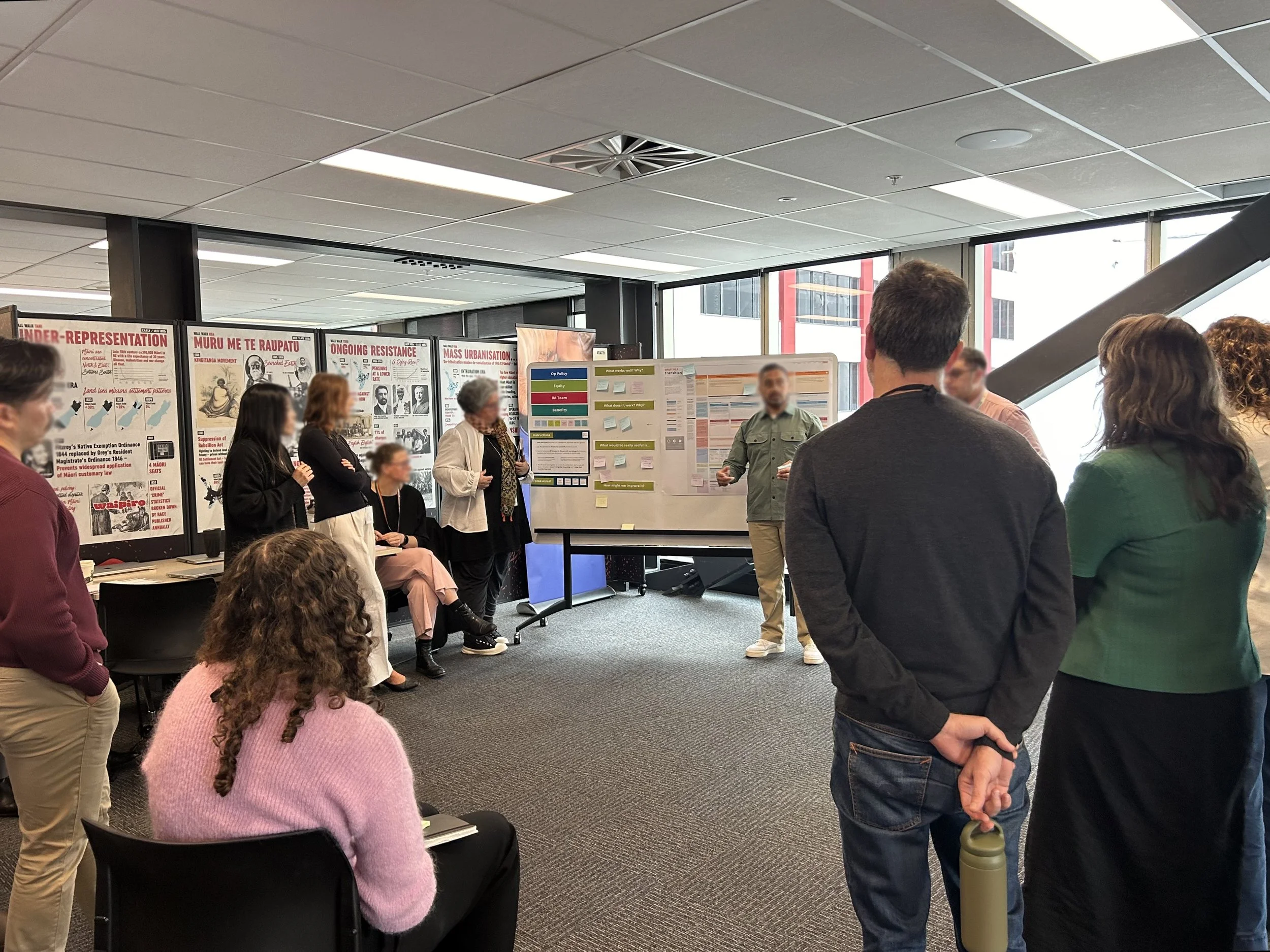
Cross-functional workshop bringing together policy, operations, and delivery teams to review service blueprinting work and build shared understanding ahead of sequencing decisions.
Key activities
Synthesised 1,500+ insights from subject matter experts and frontline representatives to ground blueprinting in real operational knowledge
Engaged policy, design, and operations teams to understand pensioner-specific needs including accessibility, overseas evidence handling, and channel preferences
Led service blueprinting of pensioner scenarios to make escalation paths, exception handling, and evidence flows explicit across high-complexity cases
Facilitated scenario walkthroughs with delivery teams to test automation assumptions and cross-agency dependencies before sequencing decisions were finalised
Designed and facilitated decision-focused sessions with programme leadership to align on sequencing priorities
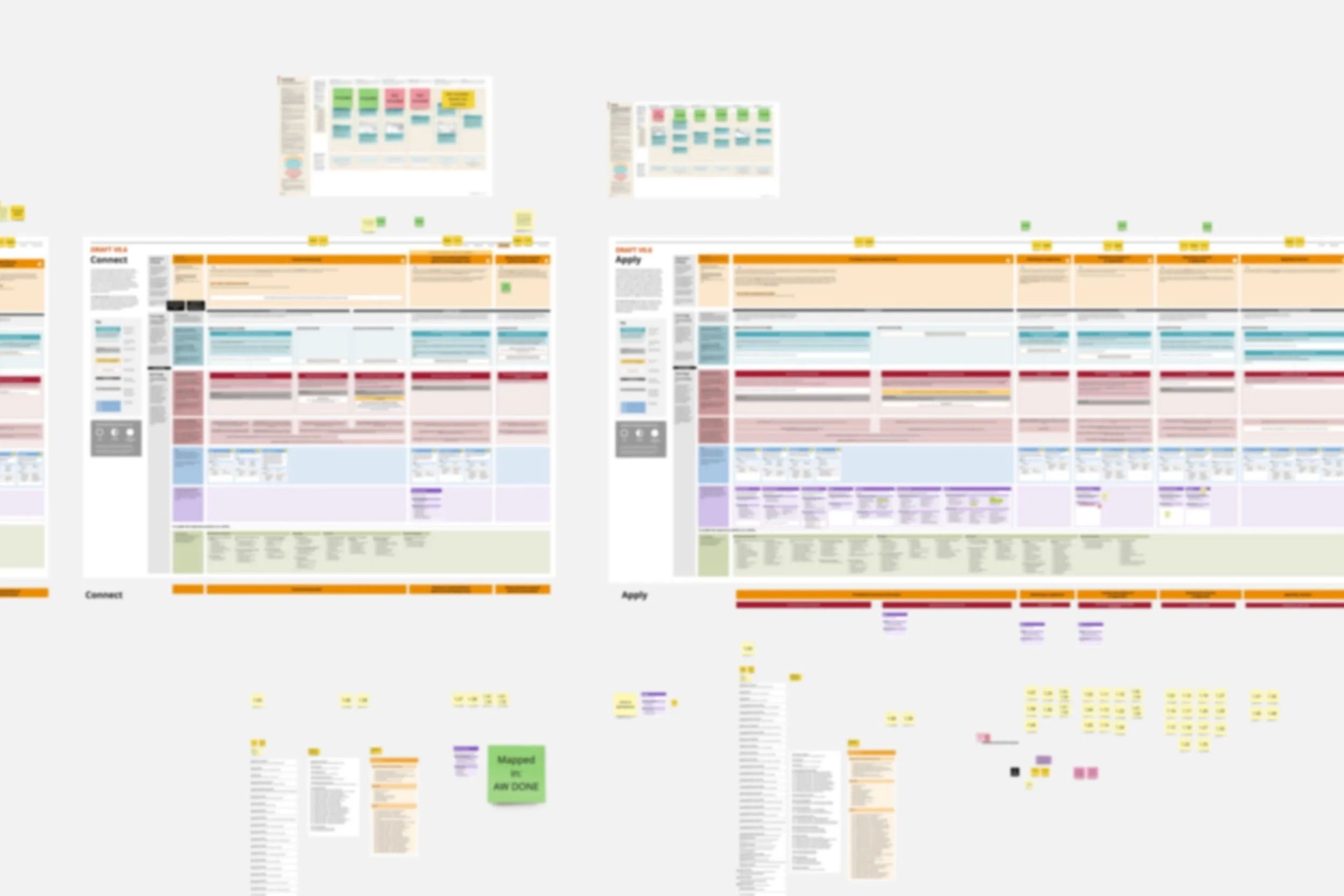
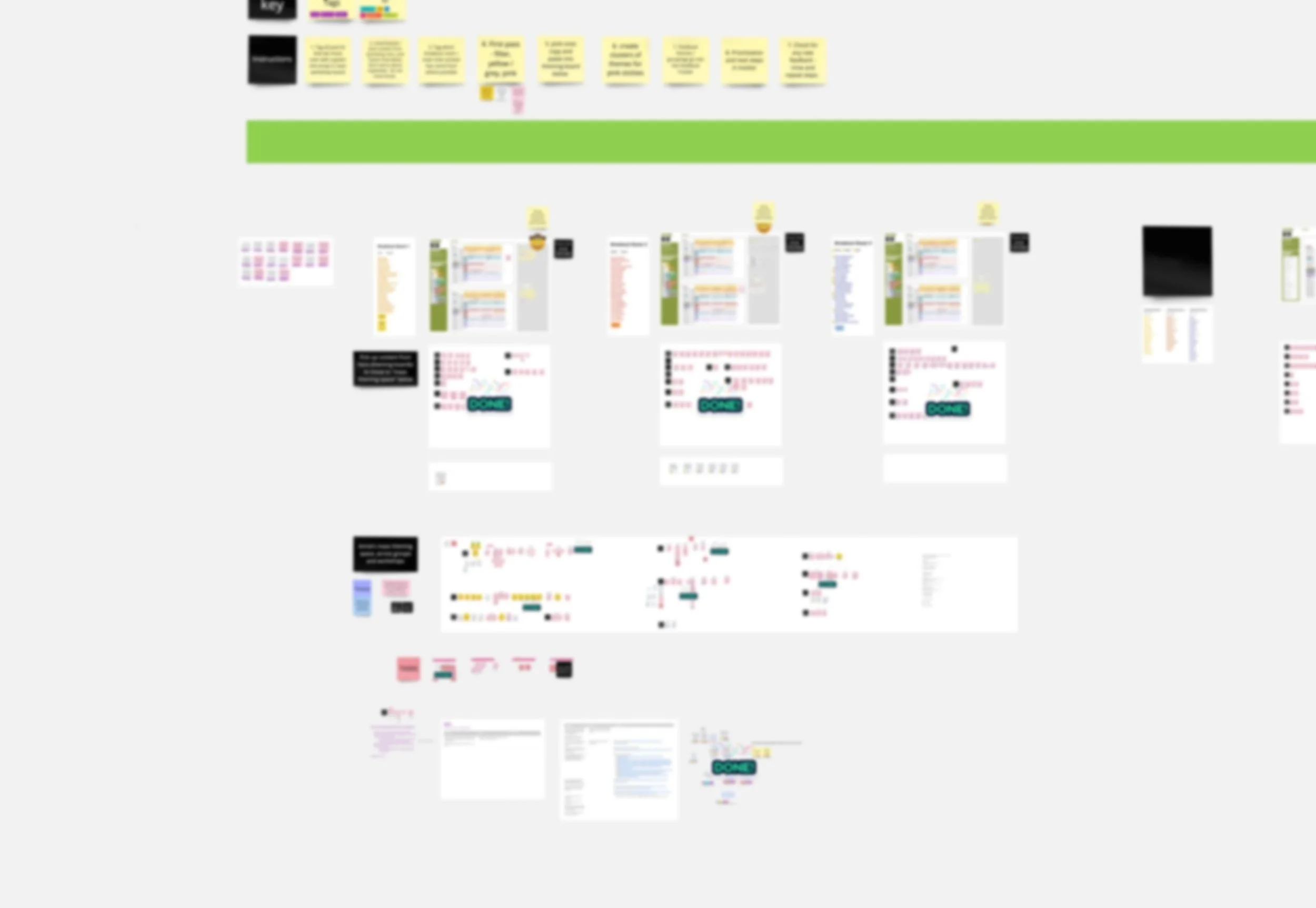
Two of seven service blueprints and supporting synthesis work, alongside output boards from programme-wide virtual workshops engaging approximately 50 participants per session across delivery teams, policy, and operations.
Contributions to key service decisions
Front-load service scoping before build, surfacing risk during design rather than delivery
Work across future and transitional states simultaneously, rather than waiting for technical certainty through vendor onboarding
Use service blueprinting to inform sequencing and funnel work into detailed design, giving business analysts a structured foundation rather than starting from scratch
Prioritise early clarity on escalation, exception handling, and cross-agency coordination where delivery risk was highest
Stress-test the tiered service model using scenarios grounded in real user edge cases before assumptions were embedded in build
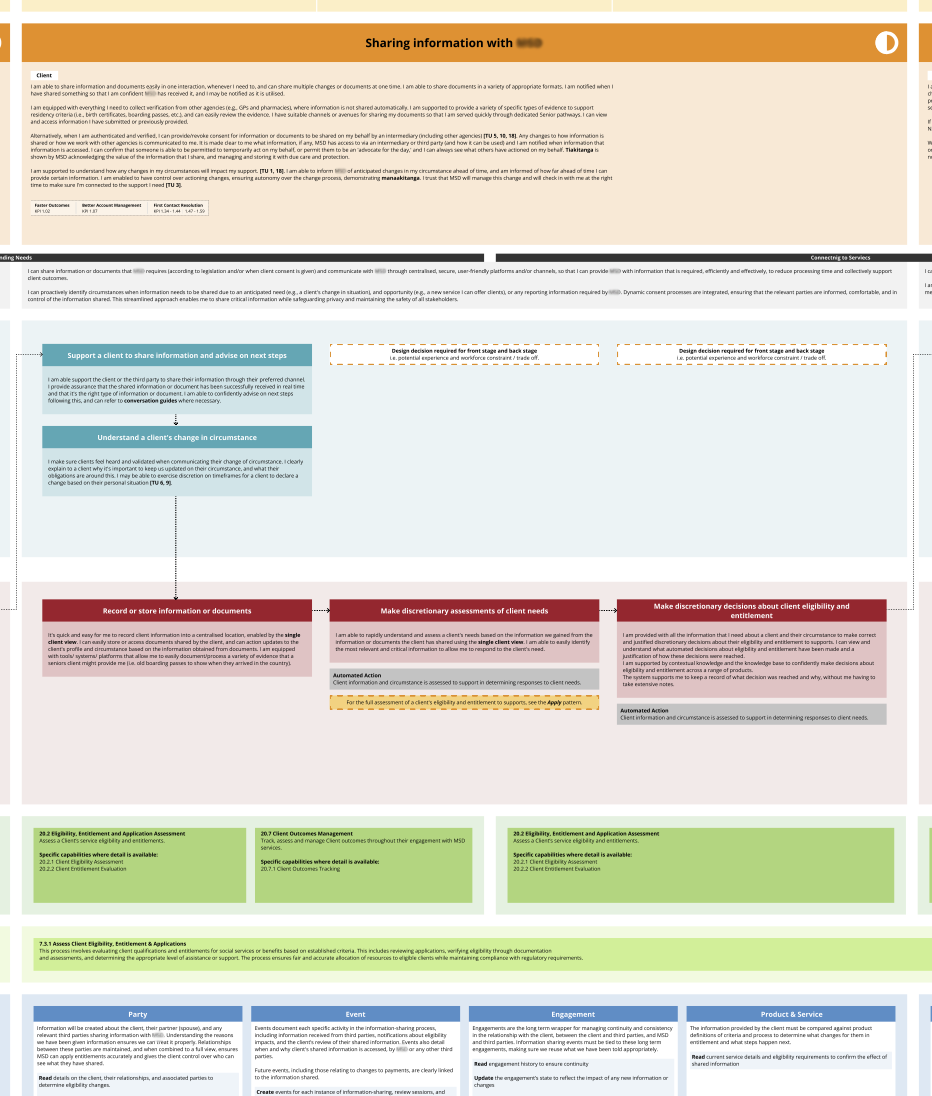
Service blueprint extract showing colour-coded swimlanes, handoff ownership, and capability mapping, used to make dependencies and escalation paths explicit for delivery teams and business analysts.
Why these decisions mattered
Front-loading service scoping allowed teams to separate assumptions requiring early resolution from those that could be safely deferred. Early blueprinting revealed that evidence handling for overseas pensioners required cross-agency coordination that would have been difficult to retrofit later — surfacing this ahead of the first build phase gave delivery teams the time needed to work through high-complexity areas and find viable solutions.
Outcomes and implications
Key deliverables
Seven future-transitional-state service blueprints approved by programme governance and the design forum
Blueprinting report summarising scope, key considerations, and trade-offs to support vendor discovery and detailed design
High-level business requirements providing a structured starting point for detailed requirements development
Decision-focused synthesis highlighting service risks and dependencies requiring early resolution
Outcomes
16+ delivery teams had early visibility into cross-agency dependencies and escalation patterns, enabling confident sequencing decisions before build began
Channel and automation decisions were grounded in realistic pensioner scenarios rather than digital-by-default assumptions
Blueprinting surfaced and funnelled work into detailed design, giving business analysts and delivery teams a structured foundation for requirements across a nationally scaled programme
Frontline staff knowledge was embedded into blueprinting decisions, ensuring the greenfield build reflected operational reality
Key learning
Service scoping is most valuable when it exposes where escalation and exception handling will dominate delivery effort — not when it describes a polished end state. Working across future and transitional states simultaneously, rather than waiting for technical certainty, kept design useful and grounded in what could actually be delivered.